
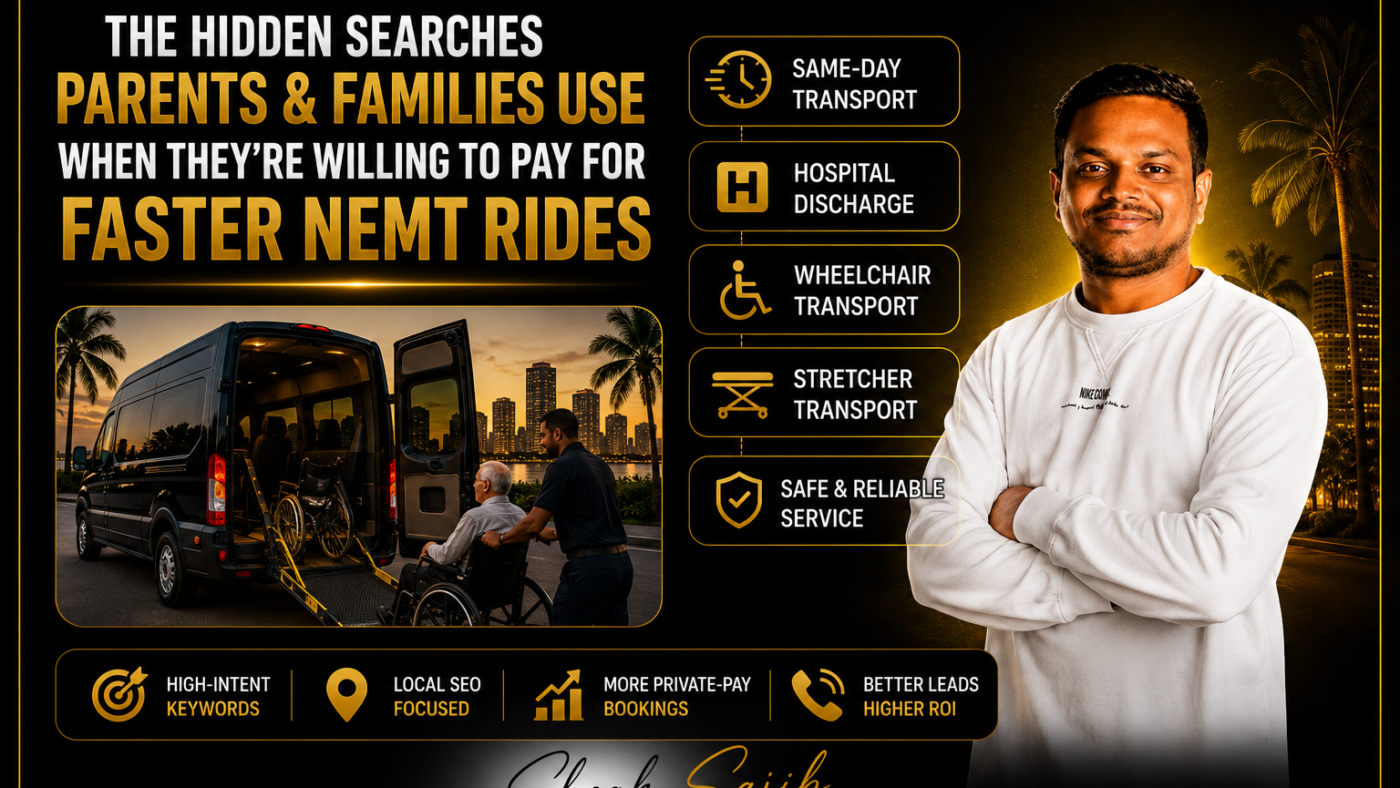
The Hidden Searches Families Use When They’re Ready to Pay for Faster NEMT Transportation

What Are High-Intent NEMT Searches?
If your NEMT business is getting traffic but not bookings, the issue is that high-value patients do not search using generic terms like “medical transportation near me” but instead use urgent, situation-based queries such as “same day wheelchair transport near me” or “urgent stretcher transport after hospital discharge,” which clearly show they are ready to book and willing to pay for immediate service.
Why Hidden NEMT Searches Matter More Than Traffic
In competitive markets like Miami-Dade and Broward County, many NEMT companies experience a gap between traffic and actual bookings because their SEO and Google Ads strategies focus on broad keywords rather than high-intent searches that drive real conversions.
Most businesses target keywords like:
- “medical transportation near me”
- “wheelchair transport Miami.”
- “non-emergency medical transportation”
These generate traffic but often attract low-intent users.
However, private-pay patients search differently, using phrases such as:
- “Same-day wheelchair transport in Miami now.”
- “urgent stretcher transport Broward County”
- “hospital discharge transport same day near me.”
These searches indicate urgency, decision-making, and willingness to pay.
Understanding High-Intent Search Behavior in NEMT
High-intent searches happen when users are in immediate need of a service, meaning they are ready to book, willing to pay, and looking for fast solutions.
Families typically search for NEMT services when:
- A patient is being discharged from a hospital
- A loved one cannot move independently
- Transportation is urgently required
- Timing is critical for appointments
In these situations, speed, reliability, and trust matter more than price.
The Hidden NEMT Keywords You Are Missing
Most NEMT campaigns fail because they ignore high-conversion keyword categories that directly reflect user intent.
Urgency-based searches include:
- same day wheelchair transport near me
- Urgent medical transport in Miami
- Immediate NEMT service in Broward County
Condition-based searches include:
- post surgery transport near me
- bedridden patient transport service
- hospital discharge stretcher transport
Service-specific searches include:
- Private stretcher transport in Miami
- wheelchair transport with assistance
- door-to-door medical transportation
Trust and safety-based searches include:
- safe medical transport company near me
- reliable NEMT transportation service
- professional wheelchair transport service
These are the keywords that generate private-pay NEMT bookings.
Why Most NEMT Websites and Ads Miss These Searches
Many NEMT businesses rely on generic SEO strategies that prioritize traffic volume instead of conversion intent, which leads to attracting the wrong audience.
Google Ads campaigns often fail due to:
- Broad match keyword targeting
- No negative keywords like Medicaid or free
- Poor location targeting
This results in:
- Low-quality calls
- Medicaid-heavy inquiries
- Wasted ad spend
Additionally, many websites lack answer-based content, which prevents them from ranking in featured snippets, voice search, and AI-driven results.
Without conversion tracking, businesses also fail to understand which campaigns are generating real bookings.
Real Example from South Florida
A NEMT provider in Broward County had strong website traffic but low bookings because they were targeting broad keywords rather than high-intent searches.
After implementing:
- Service-specific landing pages
- High-intent keyword targeting
- Google Ads optimization
- GA4 and call tracking
The business saw:
- Increased private-pay bookings
- Better quality calls
- Higher conversion rates
How to Capture High-Intent NEMT Searches
To attract private-pay patients, your strategy must focus on intent, not just traffic.
Start by mapping keywords based on urgency, condition, service type, and location, which helps you understand how users search during real situations.
Next, create dedicated service pages, such as same-day wheelchair transport or stretcher transport in specific locations, to match search intent.
Your Google Business Profile should be optimized with service-based keywords, updated content, and real reviews to improve visibility.
Google Ads campaigns should focus on exact match keywords, include negative filters like Medicaid and free, and use urgency-driven messaging.
Finally, tracking every lead using GA4, Google Tag Manager, and call tracking tools is essential for improving ROI and identifying high-performing keywords.
Local GEO Targeting for NEMT Services
To maximize visibility and bookings, your strategy must include geo-targeted content across key service areas.
Target cities include:
- Miami
- Fort Lauderdale
- Hollywood
- Pembroke Pines
- Hialeah
- Coral Springs
Nearby areas such as Kendall, Doral, Homestead, Miramar, and Sunrise should also be included to capture localized demand.
Each area has different patient behavior, competition levels, and demand patterns, which require tailored SEO strategies.
Cost of Targeting High-Intent NEMT Patients
Investing in high-intent SEO and paid ads requires a structured budget but delivers significantly better returns.
Typical investment includes:
- SEO: $1,000 to $3,500 per month
- Google Ads: $1,500 to $5,000+
- Tracking setup: $300 to $1,000
The return on investment includes higher-value bookings, better conversion rates, and scalable growth.
Prevention Tips to Capture More Private-Pay NEMT Leads
To avoid missing high-value searches:
- Avoid broad and generic keywords
- Focus on urgency-based queries
- Add negative keywords in ads
- Update service pages regularly
- Track all calls and form submissions
When to Call a Professional NEMT Marketing Expert
You should work with an NEMT SEO expert if your business is experiencing traffic without bookings, poor ad performance, low-quality leads, a lack of tracking, or difficulty scaling private-pay patients.
Why Choose a Specialized NEMT Marketing Strategy
A specialized NEMT marketing approach focuses on high-intent keyword targeting, private-pay lead generation, conversion tracking systems, and local SEO strategies designed to convert traffic into bookings rather than just increasing visibility.
If your NEMT business is missing high-intent searches and losing private-pay bookings, it is time to shift your SEO and advertising strategy to focus on patients who are ready to book immediately and pay for reliable, fast transportation.
Local FAQs
What are high-intent NEMT searches?
They are urgent searches from users ready to book medical transportation immediately.
Why does my NEMT website get traffic but no bookings?
Because it targets broad keywords instead of high-intent searches.
How can I get more private-pay NEMT leads?
By targeting urgency-based and service-specific keywords.
What keywords should NEMT businesses target?
Same-day, urgent, and private-pay focused keywords.
Why are my NEMT ads not converting?
Due to poor targeting and a lack of tracking.
Is local SEO important for NEMT businesses?
Yes, it helps capture high-intent local searches.
How do I reduce low-quality leads?
Use negative keywords and improve the targeting strategy.
Add a Comment